Call us now :07313725994
 Send Inquiry
 Send Inquiry
Multimil Sieves
Price 15 INR/ Square Meter
MOQ : 1 , , Piece
Multimil Sieves Specification
- Surface Treatment
- Polished
- Hole Shape
- Square Hole
- Product Type
- Wire Mesh
- Mesh Type
- Steel Wire Mesh
- Material
- Stainless Steel
- Application
- Food Industry
Multimil Sieves Trade Information
- Minimum Order Quantity
- 1 , , Piece
- Payment Terms
- Cash on Delivery (COD), Cash in Advance (CID), Cheque, Cash Advance (CA)
- Supply Ability
- 100 Pieces Per Day
- Delivery Time
- 1 Days
- Main Export Market(s)
- North America, Eastern Europe, Africa, Western Europe, Central America, Australia, Middle East, South America, Asia
- Main Domestic Market
- All India
About Multimil Sieves
Multi mill sieves are precision-engineered perforated screens used in multi mill machines for size reduction, granulation, and mixing processes, especially in the pharmaceutical and food industries. They are made of materials like stainless steel and come with various mesh sizes to control the final particle size of the material being processed. These sieves are crucial for achieving uniform particle size and are known for their durability and ease of cleaning.
Description and function
- Purpose: Multi mill sieves work in conjunction with high-speed rotating blades in a multi mill to break down, granulate, or blend materials.
- Size control: The perforations in the sieve act as a filter, allowing particles of a certain size to pass through while retaining larger ones, thereby controlling the final product's particle size distribution.
- Interchangeable screens: They can be easily changed to achieve different particle sizes, allowing for customizable processing according to specific requirements.
- Material: They are typically constructed from durable, high-quality materials such as stainless steel (e.g., SS 316, SS 316L) to ensure hygiene and longevity. Some are designed to be GMP-compliant and lead-free. Design: Modern designs often incorporate features like welded joints and specially designed perforations to reduce powder accumulation and increase the screen's lifespan.Applications: They are used across industries for tasks like tablet granulation, blending, and coarse screening.
Versatility: Available in various perforation sizes (e.g.,
0.2
to 
25
) to suit a wide range of applications.High-Quality Construction
Our Multimil Sieves are fabricated from high-grade stainless steel and feature a polished finish. This ensures durability as well as resistance to corrosion, making them ideal for food processing environments that require strict sanitation standards.
Precision and Efficiency
The square hole design and steel wire mesh facilitate accurate particle segregation in food processing. This enhances both the quality and efficiency of your production line, contributing to smoother operations and consistent output.
Versatile Applications
Used widely across the food industry, our sieves are suitable for sifting grains, flour, spices, and other food materials. Their robust design ensures they can withstand frequent usage in demanding industrial environments across India.
FAQ's of Multimil Sieves:
Q: How are Multimil Sieves used in the food industry?
A: Multimil Sieves are primarily employed to separate and grade food products such as grains, spices, and powders. Their precise square hole pattern ensures consistent product quality in sifting and screening processes.Q: What materials are used to manufacture Multimil Sieves?
A: These sieves are made from premium stainless steel and feature a polished surface. The mesh itself is constructed from durable steel wire, contributing to the product's strength and corrosion resistance.Q: When should I choose a polished stainless steel sieve for food processing?
A: Polished stainless steel sieves are recommended when high standards of hygiene and corrosion resistance are required, such as in food processing applications. Their smooth finish prevents residue buildup and allows for easy cleaning.Q: Where are Multimil Sieves typically utilized within the food industry?
A: They are widely used in various settings, including flour mills, spice processing units, and food manufacturing plants throughout India, where particle separation and consistent grading are essential.Q: What is the benefit of square holes in Multimil Sieves compared to other shapes?
A: Square holes provide more uniform and efficient particle separation, reducing the likelihood of clogging compared to round or oblong holes. This advantage improves processing speed and uniformity of sifted materials.Q: How is the polishing process beneficial for these sieves?
A: The polishing process enhances the sieve's resistance to rust and contamination, making cleaning easier. It also ensures the surface is smooth, which is critical for food safety and prolonged usage.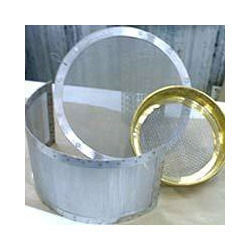
Tell us about your requirement

Price:
Quantity
Select Unit
- 50
- 100
- 200
- 250
- 500
- 1000+
Additional detail
Mobile number
Email

More Products in Wire Netting Division Category
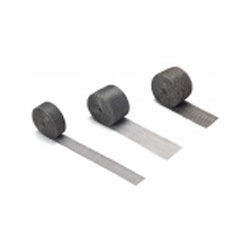
Cable Jointing Wire Mesh
Price 10 INR / Square Meter
Minimum Order Quantity : 1 , , Piece
Surface Treatment : Painted
Hole Shape : Other , Rectangular or Square
Application : Food Industry
Material : Stainless Steel
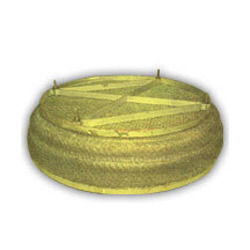
Demister Pads
Price 15 INR / Square Meter
Minimum Order Quantity : 1 , , Piece
Surface Treatment : Painted
Hole Shape : Square Hole
Application : Food Industry
Material : Stainless Steel
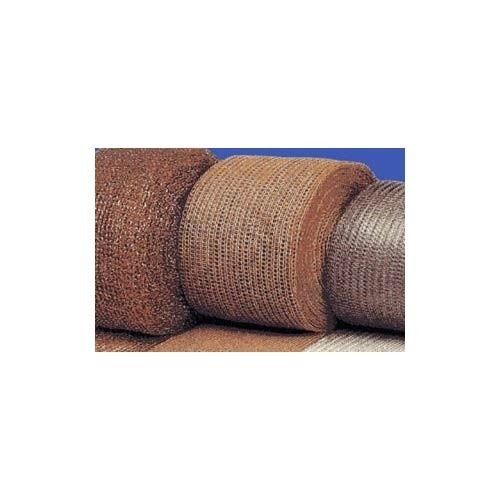
Moja Jali
Price 16 INR / Square Meter
Minimum Order Quantity : 1 , , Piece
Surface Treatment : Painted
Hole Shape : Square Hole
Application : Food Industry
Material : Iron
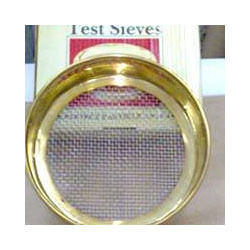
Test Sieves
Price 12 INR / Square Meter
Minimum Order Quantity : 1 , , Piece
Surface Treatment : Polished
Hole Shape : Square Hole
Application : Food Industry
Material : Stainless Steel

 Send Inquiry
Our Products
- Agro Shade Net
- Cloth Tape
- Filteration Item
- Industrial Mesh
- Safety Net
- Shaft Sleeve
- UV Stabilized Film
- Wire Netting Division
- Filter Division
- Screen Printing Division
- High Temperature Fabrics
- Gardening Nets
- Safety Nets
- Packaging Nets
- Nets for Agricultural Industry
- Filter Division for Textile Industry
- Wire Netting Division for Garden Fencing

3621, Chawri Bazar, Near Loha Bhawan, Near UCO Bank,Delhi - 110006, India

Mr Kshitij Gupta
(Partner)
Mobile :07313725994
 Send Inquiry
 Send SMS
Developed and Managed by Infocom Network Private Limited.
